
Top 5 Whisky Tasting Questions
Five Questions I Regularly Get Asked
I really enjoy doing talks and tastings about whisky. Sharing my collection, stories and history. The guests are varied in their whisky journey. Some are experts, some think they are experts and others are novices. There are company groups, groups of friends, or pairings with craft beer. It is very varied and it is always fun. The interaction is always great and I get some very interesting questions.
In my tastings, there is no such thing as a stupid question and I encourage all of the groups to ask and comment. Some things, though, come up more often than others. Here are the top 5 that I get asked:
Question 1: Where Did Whisky Originate?
This is a pertinent question and quite logical. Where did whisky come from? Who invented or discovered it? However, the precise origins of whisky remain unknown. The production of whisky required the convergence of two essential elements: the craft of brewing beer and the process of distillation. Essentially, whisky is distilled beer, with further refinements mainly occurring during maturation.
Distillation has been traced as far back as 4000 BC for the creation of perfumes, whereas advanced beer brewing was primarily developed in monastic settings but also existed several millennia prior in the Middle East. At some point, the decision to distil beer resulted in the production of a stronger spirit. And the storing of this spirit in casks was probably just an accident!
Historical records from the 1400s in both Scotland and Ireland suggest that the Celts may have initiated the distillation of beer, likely among farmers with surplus grain. Spirit was certainly created at Lindores Abbey in Scotland in 1494. So until now, there have been over five centuries to get it right!
Over that time, production methods have evolved significantly, resulting in the sophisticated processes we recognize today.
Question 2: Does Whisky Always Improve With Age?
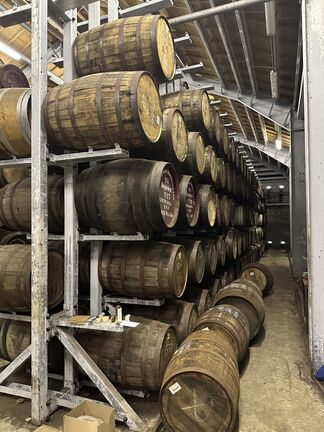
This is a common question at my tastings, where I present both younger and older whiskies from various distilleries. Initially, the answer is affirmative; whisky must mature for at least three years in an oak cask before it is legally classified as whisky. Beyond that, it is commonly thought that the longer you mature whisky, the better it gets. A 30 year old whisky must be better than a 5 year old one, right? Well this is where the yes becomes a maybe. Age does not always equate to a "better" whisky.
Upon distillation, whisky acquires metallic notes due to contact with copper, which are evident in "new make" whisky, often considered unpalatable. The maturation process in oak casks gradually diminishes these metallic flavors while imparting desirable wood-based characteristics. Factors such as cask size, storage temperature, and previous contents of the cask all influence this transformation. See my Blog entry "The Power of the Cask" for more information.
The optimum bottling moment occurs when a good balance is achieved; excessive maturation can lead to an overpowering wood influence. Consequently, distillers routinely sample casks to monitor progress and decide the right point at which a whisky should be bottled. And this can be anywhere between 3 and 30 plus years. I have some wonderful 30+ year old whiskies. But I also have some incredible 3 year olds.
Question 3: Why are Whiskies Bottled at Cask Strength?
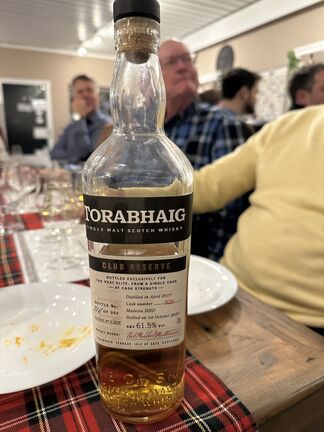
Whisky labeled as cask strength is bottled without dilution, resulting in higher alcohol content. In contrast, blended and mass-market whiskies are typically bottled at 46%, 43%, or 40% Alcohol By Volume (ABV), following dilution with water prior to bottling.
This question about “why cask strength” is a frequent question from guests who prefer adding water to their dram. Adding water is entirely acceptable and allows each individual to tailor the flavor profile to their preference, mitigating the strong sensory impact of high alcohol content. Adding drops of water bring down the ABV and also adjust the nose and taste of a whisky.
Some enthusiasts, however, choose to enjoy whisky at cask strength, a choice only possible when undiluted, cask-strength options are available.
Furthermore, while water may be added incrementally to achieve the desired taste, the addition of ice is strongly discouraged. Ice dilutes whisky uncontrollably, depending on the cube's size, and can result in over-dilution.
So cask-strength gives more choice and opportunity to the whisky drinker.
Question 4: Does Every Distillery Make Whisky The Same Way?
This is a yes and no answer! While all distilleries follow the same six basic steps—malting, mashing, fermentation, distillation, maturation, and bottling—the details of each step vary widely by distillery.
- Malting may use hot air or peat fires to dry barley giving up a wide range of taste influence.
- Mashing and fermentation differ in time and temperature altering the texture and strength of the “beer”.
- Each distillery uses uniquely shaped stills for distillation, affecting copper contact and therefore flavor profiles.
- Maturation has a major impact on taste and color. There is a heavy influence on the whisky from the type, size and history of each cask (see “the power of the cask”)
- The point of time chosen for bottling also influences the final product as mentioned in the answer to the previous question.
These variations define each distillery and batch of whisky. Over centuries, distillers have developed expertise to fine-tune their processes, shaping results intentionally rather than by chance. Newer distilleries are purposely designed for the end product desired by the master distiller.
So at a high level, the answer is yes. The main process steps are the same at each distillery. But the answer is a firm no when you dig deeper into how those main process steps are executed. And this is why there is such a wide variety of colour and flavours in the whisky world - keeping us all even more curious.
Question 5: Do Women Like Peated Whisky?
This question often comes up in all-male groups, where some believe peaty whisky is mainly for men. It always makes me smile because, at my tastings—which host male, female, and mixed groups—about 40% of attendees are women. And interestingly, more men than women have rejected peated whisky on first sip or nose, while women tend to be more open-minded. Even if they don’t enjoy it initially, women often try it again or ask for something a bit less peaty.
Peated whisky can be a bold introduction compared to something smoother or sweeter, but it deserves appreciation. I wouldn’t recommend starting with an intensely peated whisky like Laphroaig or Ardbeg—instead, try an Islands whisky first. Highland Park or Ledaig make excellent starting points.
Each person’s palate is unique, and preferences vary widely, especially with whisky. In my experience, whether someone enjoys peated whisky doesn’t depend on gender.
The Take Away
Ultimately, whisky sparks curiosity, and curious people are eager to experiment—one reason I truly enjoy hosting these events. These are just a sample of the questions that come up and the discussions we have. Sharing the passion!